
Hexagon
A mudlib: the layer of code that turns a bare MUD driver into a world with rooms, objects, combat and players.
Where it comes from
Text-based online games split long ago into families defined by the technology underneath them. The LP family is written in LPC, and over the years several drivers appeared to run slightly different flavours of it: LDMud, MudOS and its descendant FluffOS, and DGD.
Hexagon takes mudlib code written for MudOS, some of it decades old, and makes it run on DGD, which is better engineered and carries a far less restrictive licence. DGD is not aimed only at MUDs, so it offers less out of the box; this library is the layer that fills the gap.
Features
A classic LP mudlib builds its world through inheritance. Hexagon adds an entity component system next to it rather than replacing it, so features can be attached to objects as components while the inherited code keeps working unchanged. Porting a game does not start with rewriting it.
The point of that split is that it keeps the data apart from the behaviour. The component holds its own state, which travels inside the save file of whatever carries it, and the code that gives that state meaning lives in the component itself. A room becomes a shop, a forge, a farm or a temple by attaching one from inside the game, standing in the room, with no file edited. Content is added and changed by playing, not by programming.
The inhabitants are built the same way, which is what makes a town read as one. Each has a name and a surname, taken from a family that records its spouses, its parents and its dead, and whose descent, who gives the surname, is a decision of the culture rather than of the engine. They hold a job the settlement offers, work it at a particular place and have a house to come back to, and a timetable says which of the two the hour calls for. They walk there room by room instead of appearing, so the streets have people crossing them on their way somewhere.
One instance, several games, two languages
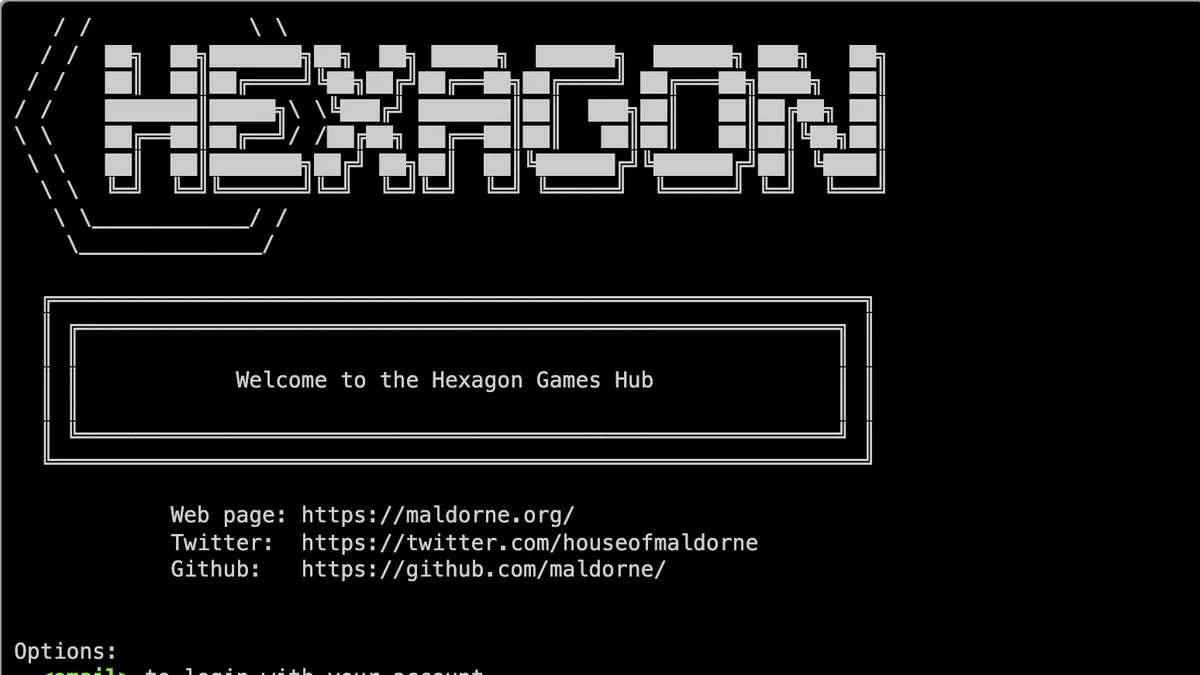
These are persistent online text games: a world the server keeps running whether or not anybody is connected, described in prose and played by typing rather than by looking. A single running instance hosts more than one of them, which is why the client opens on a hub rather than on a world. The mudlib is translated, so the same code can run an English game and a Spanish one.