GhostMesh
IRC is the chat protocol open-source projects have been arguing over since the late eighties, and a good part of them still live on it. The clients, though, are either a desktop application that looks its age or a hosted service that wants an account first. GhostMesh is a third option: a web client you open, point at the networks you use, and close.
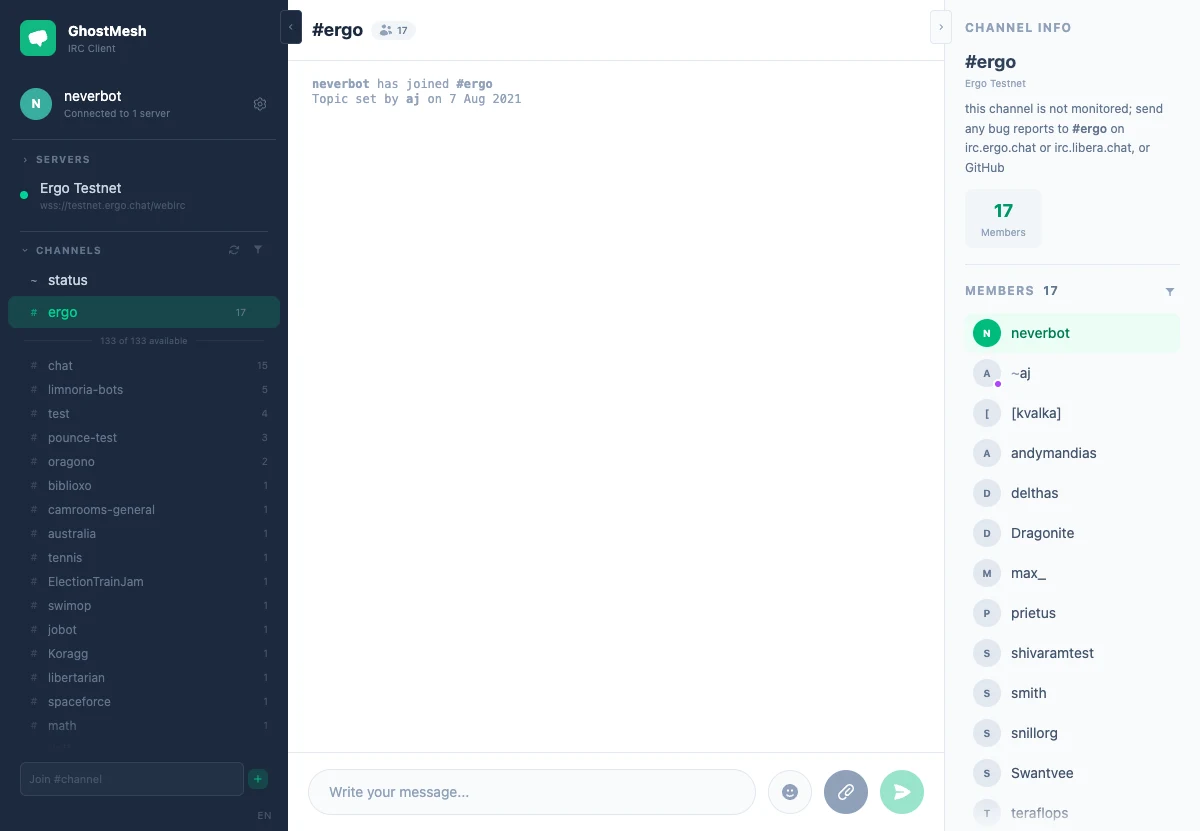
Three panels: every channel on every network you are connected to, the conversation, and who is in it.
Several networks, one window
The point of it is the plural. Connections to different networks are live at the same time, and the channel list is the union of all of them, filterable by name, by network, or by how many people are in a channel. Private conversations sit beside the channels with the other person’s online status attached, and each network keeps its own nickname, username and display settings, because they are rarely the same twice.
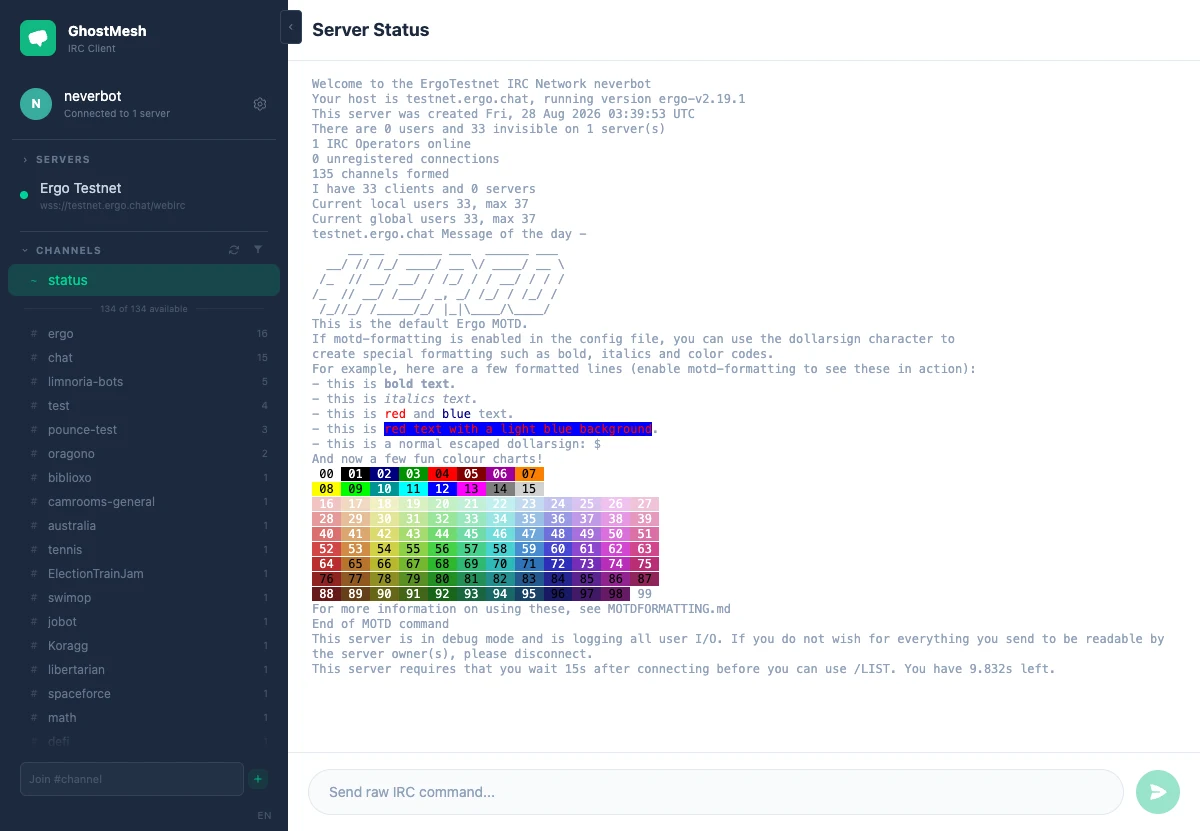
The channel list of one network, and in the right pane the colour and formatting codes IRC has carried since the nineties, rendered rather than printed raw.
Reload the page and it reconnects to the servers and channels you had open. The session is in your browser, which is also the only place anything is kept.
Written to be extended
Which networks the client offers is configuration: each server is a file declaring how to reach it and how to behave once there. The repository ships that directory empty on purpose, because which networks a client reaches is not the client’s business.
The rest is plugins, written in TypeScript and picked up when the project is built. They are the seams where it meets services of your own: somewhere to upload a file to before pasting its link, something that turns a link into an image the conversation can show inline, a proxy to fetch that image through when the site hosting it will not answer a browser directly, or one that bridges a network still speaking only the plain socket IRC was built on, which a browser cannot open.
None of that lives in the repository. GhostMesh is the client; what it leans on is yours.
Underneath it is Vue 3 with the composition API, Pinia for state, strict TypeScript, Tailwind, and a plain WebSocket for the IRC connection itself. Interface in English and Spanish.